


Your website works. It functions as it should. The information is there.
But does it feel like you?
As an interior designer, you know better than anyone that a space can be technically functional, yet still feel off. And your website is no different.
You pour your heart into creating spaces that feel intentional, personal, and deeply reflective of your clients’ lives. But when it comes to your own online presence, it’s easy to fall into the trap of playing it safe.
Think of your website as the first impression a potential client has of your design sensibility. Now let’s talk about the best website tips for interior designers to reflect your unique talent.
1. Use Photos of You (and Your Actual Work), Not Stock
Stock photos are polished, easy, and fill up space quickly when you’re trying to launch a new website.
But interior design is an incredibly personal, trust-based service. People are inviting you into their homes – literally and figuratively. They want to get a sense of who you are so they feel like they can trust you.
That’s why using as many actual photos of yourself and your work matters so much.
You don’t need a professional photoshoot to make this work. Candid headshots, behind-the-scenes shots of you styling a space, anything authentic and real will build connection in a way that generic stock photos just won’t.
2. Use Words You Actually Love, Not Industry Jargon
Your website copy should sound like you having a conversation with a potential client.
Think about the words and phrases you actually use when talking about your work. Do you say “vibe” instead of “aesthetic”? Do you describe spaces as “lived-in” rather than “polished”? Do you focus on creating homes that feel “effortless” or “luxurious”?
If you tend to be warm and conversational, let that come through in the words on your website. If you’re more direct and no-nonsense, that’s cool too – just own it! The point is to write website copy that sounds like you, so prospects that inquire are automatically more aligned.
3. Match Your Visuals to Your Interior Design Process
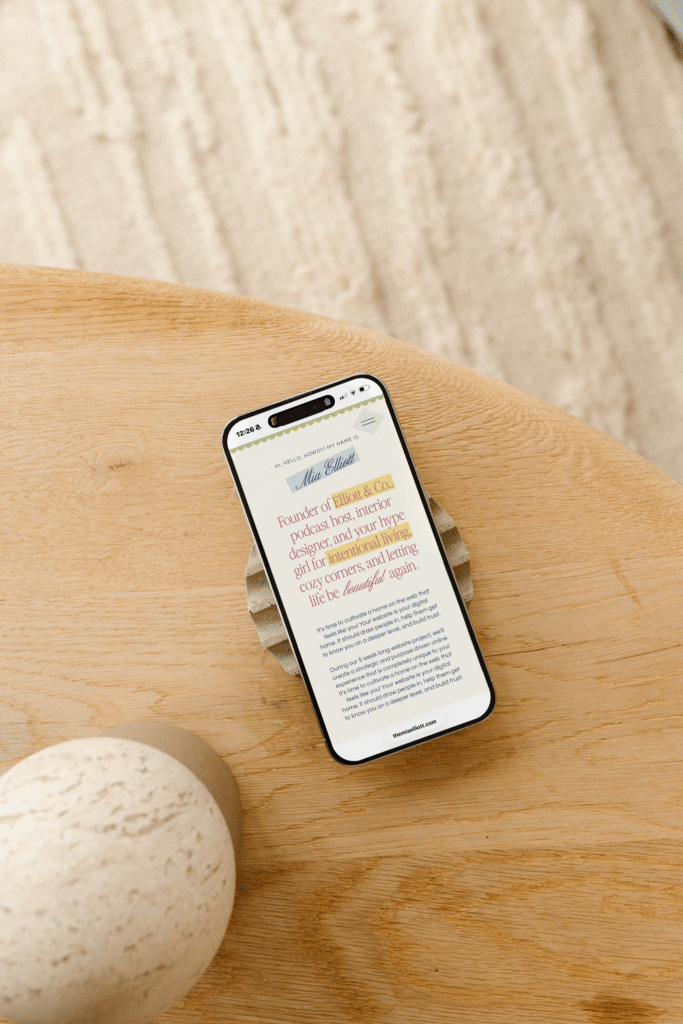
Make sure every visual choice – your typography, your layout, your imagery, maybe even the way content is structured – aligns with the brand personality and experience clients can expect when working with you.
If you specialize in bold, maximalist interiors, your website probably shouldn’t be stark white with minimalist serif fonts.
If you’re known for your organic, earth-toned spaces, maybe skip the high-contrast neon accents in favor of some calm neutrals.
Think of your website as the visual preview of what it’s like to work with you. When your visuals and your process feel like they match, it reinforces to potential clients that you’re the right interior designer for them.
4. Curate Your Offers Page for Clarity
Your services pages as an interior designer needs to be curated, clear, and designed to help the right clients say yes (and the wrong ones to self-select out).
The last thing you want is for a potential client to click off your website feeling confused about what package they need or scared to inquire because they can’t figure out how much the investment is.
If you primarily work on residential projects, lead with that. If you offer multiple tiers or service levels, make the distinctions obvious. Be clear about what’s included, what your timelines look like, and the investment clients should expect to make.
5. Invest in Branding That Reflects Your Interior Design Level
If your website feels thrown together, potential clients might make assumptions about what your interior design work will be like.
I’m not saying it’s fair, but what I am saying is that perception matters – especially in such a visual industry as interior design.
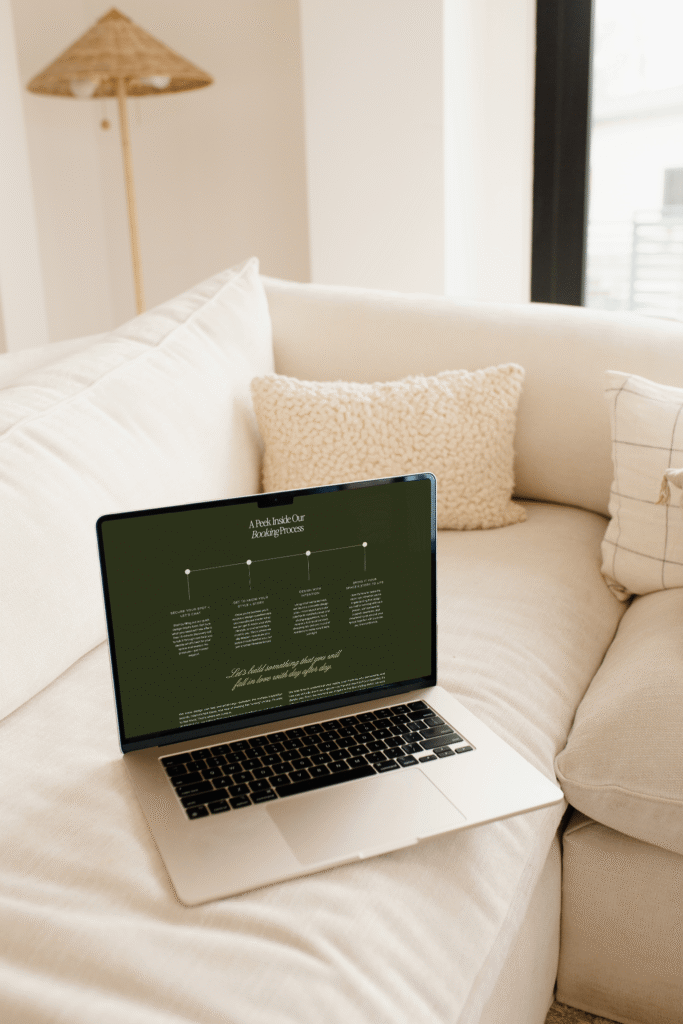
This is where knowing your brand style and investing in professional brand design can make all the difference.
Your interior design brand identity – your logo, color palette, and typography – subconsciously sets the tone for how clients perceive your business before they read a word of your website copy or click through to your portfolio.
If you’re raising your prices, targeting high-end clients, or simply just trying to get established in the industry, investing in a professional brand identity helps you better communicate your value and position yourself strongly.
Your Website Should Feel Like Stepping Into One of Your Spaces
In a way, your website is like an extension of your interior design work. It gives clients a glimpse of your style, how you think about layout, and what you might be like to work with.
Making your website feel authentic to your business doesn’t require a complete redesign or massive overhaul. It just requires intentionality, and these website tips for interior designers are a great starting point.
But if your website still feels disconnected from the work you’re doing, or you’ve outgrown your DIY website and are ready to level up – I can help.
I specialize in branding and web design for interior designers and creative business owners who want an online presence that feels just as intentional as their work. Book your discovery call and let’s chat.


